Knock Fever: Cannon-Based Physics Puzzle Game for Casual Mobile Players
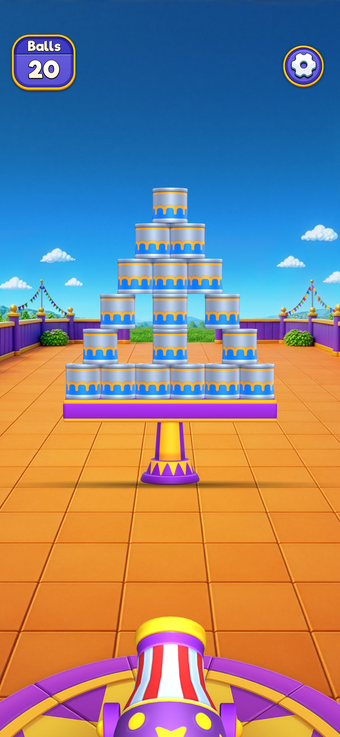
Knock Fever, from Kite Games Oyun ve Yazilim Anonim Sirketi, is an iPhone casual title that tasks players with using a cannon to demolish colorful block towers. The game focuses on physics-driven destruction and chain reactions, rewarding precise aiming and limited-shot strategy across hundreds of handcrafted stages. Controls rely on single-touch tap-and-drag aiming, while animations and explosive effects emphasize visual feedback. The title targets short play sessions for casual mobile gamers who enjoy tactile, puzzle-like destruction.
What kind of game is this?
The game is a casual, physics-based action puzzler that places a cannon at the player's disposal to topple colorful block towers. Players aim, fire, and observe structural collapses, seeking weak points that trigger chain reactions. Success requires both accurate shots and stage strategy because stages are handcrafted and numbered in the hundreds. This loop supports short sessions focused on satisfying destruction rather than long-form progression.
What keeps you coming back after the first session?
Replay pulls come from the physics system and varied level design. The title emphasizes satisfying "tower-smashing" collapses and chain reactions that reward finding a single critical strike, and handcrafted layouts reduce repetition across stages. Players chasing higher scores reattempt levels to improve shot economy, and the immediate visual feedback combined with escalating structural complexity sustains short-term replay across many scenes.
What does the game look and sound like?
The presentation leans bright and playful, with a vibrant color palette, smooth animations, and explosive effects that highlight each collapse. Visual feedback is central, so block tumbling and particle bursts carry the moment of success. Interface elements stick to a minimal touch scheme: single-touch tap-and-drag aiming and a clear shot counter, keeping interactions compact for mobile play without cluttering the screen.
Is it hard to get started?
Initial entry is straightforward because controls are intentionally simple, making individual stages approachable on first contact. Challenge rises as designs demand precision; limited-shot mechanics and structural complexity force deliberate targeting and occasional trial-and-error. Players who prefer relaxed, one-off sessions find quick satisfaction, while those seeking mastery accept repeated attempts to learn collapse points and improve shot economy across later levels.
In summary, the game rewards focused short sessions.
In summary, the game rewards focused short sessions and patience, making it a good fit for casual players who enjoy repeated, bite-size challenges and deliberate problem solving. Those seeking extended progression systems or social competition may find the structure limiting. It rewards brief returns rather than lengthy campaigns, so choose it if you prefer compact, trial-and-error puzzles over long-form multiplayer engagement.